If you are trying to decide between an Individual Savings Account (ISA) and a Lifetime ISA (LISA) in 2025, you are not alone. Across UK finance forums, Reddit discussions, and personal finance communities, this is one of the most common questions people ask.
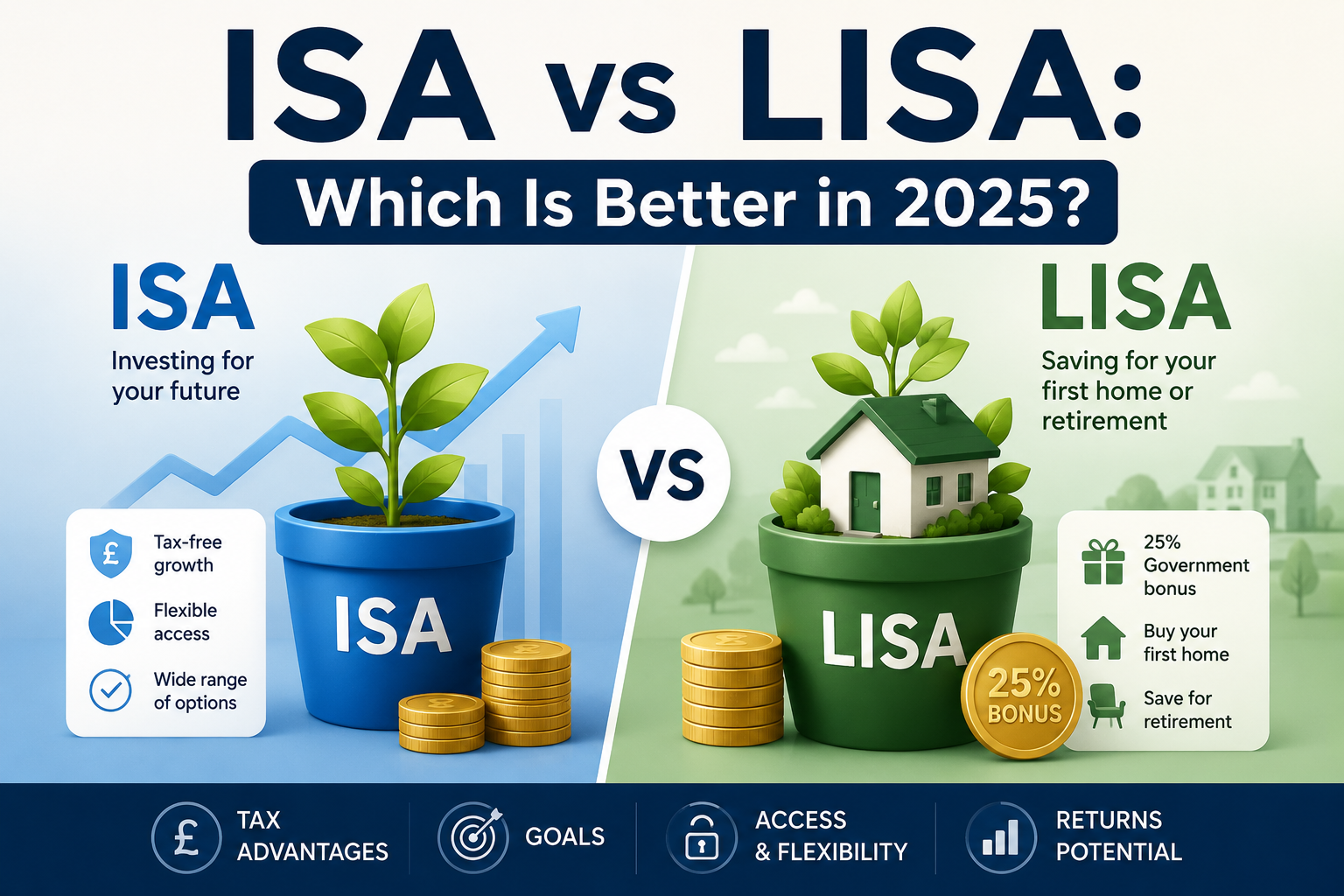
The truth is: neither account is universally “better.” The right option depends on your age, savings goals, income, and whether you plan to buy your first home or save for retirement.
In this guide, we will break down the key differences between ISAs and LISAs, explain the pros and cons of each, and help you decide which account could work best for your financial future in 2025.
What Is an ISA?
An ISA (Individual Savings Account) is a tax-efficient savings or investment account available to UK residents. The biggest benefit is that any interest, dividends, or investment gains earned inside the account are tax-free.
There are several types of ISAs in the UK:
- Cash ISA
- Stocks and Shares ISA
- Innovative Finance ISA
- Junior ISA
- Lifetime ISA (LISA)
For most people comparing “ISA vs LISA,” they usually mean a standard Cash ISA or Stocks and Shares ISA versus a Lifetime ISA.
Key ISA Features in 2025
- Annual allowance: £20,000
- No tax on interest or investment growth
- Withdraw money anytime (depending on provider rules)
- Available to adults aged 18+
- No government bonus
A standard ISA gives you flexibility. You can save large amounts, access your money when needed, and avoid withdrawal penalties.
What Is a LISA?
A Lifetime ISA (LISA) is a special type of ISA designed to help people either:
- Buy their first home
- Save for retirement
The government adds a 25% bonus to your contributions.
For every £4,000 you save annually, the government adds up to £1,000 free each tax year.
Key LISA Features in 2025
- Must be aged 18–39 to open one
- Maximum contribution: £4,000 per year
- Government bonus: 25%
- Funds can be used for:
- First home purchase (up to £450,000 property limit)
- Retirement after age 60
- Withdrawal penalty applies for other uses
This government bonus is the main reason many people choose a LISA.
ISA vs LISA: The Main Differences
| Feature | Standard ISA | Lifetime ISA (LISA) |
|---|---|---|
| Annual allowance | £20,000 | £4,000 |
| Government bonus | No | Yes (25%) |
| Withdrawal flexibility | Flexible | Penalty for non-qualifying withdrawals |
| Age limit | 18+ | Must open between 18–39 |
| Best for | Flexible savings & investing | First home or retirement |
| Tax-free growth | Yes | Yes |
Why Many People Prefer a LISA in 2025
1. The Government Bonus Is Hard to Beat
The biggest attraction is the free money from the government.
Example:
- You save £4,000
- Government adds £1,000
- Total becomes £5,000
Very few savings accounts offer an instant 25% return.
For first-time buyers struggling with deposits in 2025’s expensive property market, this bonus can make a major difference.
2. Great for First-Time Home Buyers
A LISA can help accelerate saving for a house deposit.
Many UK buyers online say the government bonus helped them:
- Reach their deposit target faster
- Reduce mortgage borrowing
- Buy earlier than expected
Couples can also each open a LISA.
Example:
- Person A saves £4,000 → gets £1,000 bonus
- Person B saves £4,000 → gets £1,000 bonus
Combined annual bonus = £2,000.
Over several years, this becomes substantial.
3. Useful as a Retirement Supplement
Some savers use a LISA as an additional retirement account alongside a pension.
Benefits include:
- Tax-free withdrawals after age 60
- Government bonus on contributions
- Investment growth potential
This appeals particularly to self-employed workers who want another long-term savings option.
Why Some People Prefer a Standard ISA
1. Flexibility
This is the biggest advantage of a normal ISA.
You can usually:
- Withdraw anytime
- Use funds for emergencies
- Change goals without penalties
A LISA punishes non-qualifying withdrawals.
In 2025, the withdrawal charge remains 25%, which means you can actually lose some of your own money.
Example:
- You contribute £4,000
- Government adds £1,000
- Total = £5,000
- Withdraw early → 25% charge = £1,250
- You receive £3,750
You lose £250 of your own contributions.
This is one of the biggest complaints people raise online about LISAs.
2. Higher Contribution Limits
A standard ISA allows up to £20,000 yearly contributions.
A LISA caps contributions at £4,000 annually.
High earners or aggressive savers often prefer Stocks and Shares ISAs because they can invest much larger amounts tax-efficiently.
3. Better for Uncertain Life Plans
Many people in online finance discussions mention that life changes unexpectedly.
You may:
- Move abroad
- Delay buying a home
- Need emergency cash
- Change career
- Face unexpected bills
A standard ISA provides easier access and fewer restrictions.
Common Questions People Ask Online
“Can I Have Both an ISA and a LISA?”
Yes.
In fact, many financially savvy savers use both.
Example strategy:
- Emergency fund in a Cash ISA
- Long-term investing in Stocks and Shares ISA
- House deposit savings in a LISA
Remember:
- The £4,000 LISA allowance counts toward the overall £20,000 ISA allowance.
“Is a LISA Better Than a Pension?”
Not necessarily.
Pensions still offer:
- Employer contributions
- Tax relief
- Higher contribution potential
However, some people like LISAs because:
- Withdrawals after 60 are tax-free
- Rules feel simpler
- They want savings flexibility outside pensions
For many UK savers, the best approach is using both.
“What Happens If House Prices Exceed the £450,000 Limit?”
This is a major concern in parts of the UK, especially London and the South East.
The LISA property purchase cap remains £450,000 in 2025.
If your first property exceeds this threshold:
- You cannot use the LISA penalty-free
- You may face withdrawal penalties
This issue is heavily debated online because rising house prices have made the limit restrictive in some areas.
ISA vs LISA for Different Types of People
Best for First-Time Buyers
Winner: LISA
The 25% government bonus gives it a major advantage if:
- You qualify
- Your property is under £450,000
- You do not need short-term access
Best for Flexible Savings
Winner: Standard ISA
If you value:
- Emergency access
- No penalties
- Simplicity
A regular ISA is usually safer.
Best for Long-Term Investing
Depends on your goals.
A Stocks and Shares ISA offers:
- Flexibility
- Large contribution capacity
- Tax-free investing
A Stocks and Shares LISA offers:
- Government bonus
- Retirement-focused growth
- Restrictions on withdrawals
Some investors combine both.
Real-Life Example
Sarah, Age 27
Sarah wants to buy her first home in 4 years.
She saves:
- £333 monthly into a LISA
- Total yearly contribution = about £4,000
Government bonus:
- £1,000 annually
After 4 years:
- Personal savings = £16,000
- Government bonuses = £4,000
- Plus investment or interest growth
Total could exceed £20,000 before growth.
For Sarah, the LISA clearly beats a standard ISA.
James, Age 35
James is unsure whether he wants to buy property or relocate abroad.
He wants:
- Easy access to cash
- Investment flexibility
- No withdrawal penalties
A Stocks and Shares ISA suits him better.
Final Verdict: Which Is Better in 2025?
The answer depends on your financial goals.
Choose a LISA if:
- You are a first-time buyer
- You are comfortable locking money away
- You want the government bonus
- Your future property will likely cost under £450,000
Choose a standard ISA if:
- You need flexibility
- You may need emergency access
- You want to invest larger amounts
- Your life plans are uncertain
For many people in 2025, the smartest solution is actually using both strategically.
A LISA can help maximise government bonuses, while a standard ISA provides flexibility and additional tax-free investing space.
Frequently Asked Questions
Can I withdraw money from a LISA anytime?
Yes, but withdrawals for reasons other than buying your first home or retirement after age 60 usually trigger a 25% penalty.
Is a Cash ISA safer than a Stocks and Shares ISA?
Generally yes. Cash ISAs are lower risk, while Stocks and Shares ISAs can rise or fall in value.
Can I transfer an ISA into a LISA?
Yes, many providers allow ISA-to-LISA transfers, subject to annual allowance rules.
Can I open a LISA after age 40?
No. You must open one before turning 40, although you can continue contributing until age 50.
Is the government bonus guaranteed in 2025?
As of 2025, the 25% LISA government bonus remains in place under current UK rules.